

Ansul Fire Systems
Ansul fire suppression systems: a comprehensive guide for special hazard protection
Protecting high‑value assets, critical infrastructure, and occupied spaces requires more than conventional fire protection. In environments where electronics, sensitive equipment, or complex processes are involved, the wrong suppression method can be as damaging as the fire itself.
Ansul fire suppression systems are designed specifically for these challenges. Tested to strict national and international standards, Ansul’s special hazard solutions protect people, assets, and operations while minimising downtime and secondary damage.
This guide breaks down Ansul’s key fire suppression systems, their applications, and how they address different risk environments.
Clean agent fire suppression systems
Sapphire Fire Suppression Systems
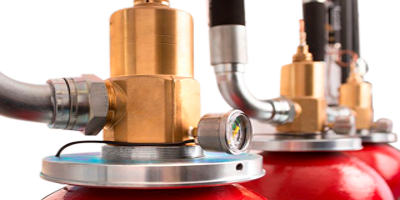
Using water in environments filled with electronics or irreplaceable assets can cause catastrophic damage. The SAPPHIRE® Clean Agent Fire Suppression System is engineered to suppress fires quickly without harming people, equipment, or the environment.
Sapphire systems use FK‑5‑1‑12 fire protection fluid in total flooding applications. This clear, colourless agent:
- Has zero ozone depletion potential
- Has an atmospheric lifetime of just five days
- Has a global warming potential of 1.0
- Evaporates quickly after discharge, leaving no residue
Because the agent is electrically non‑conductive and non‑toxic at design concentrations, Sapphire systems are ideal for:
- Data processing facilities
- Control rooms
- Power generation plants
- Museums and archives
- Aviation facilities
The system suppresses fires before they fully develop, helping protect valuable assets and maintain operational continuity.
Sapphire 25 bar system (gaseous clean agent)
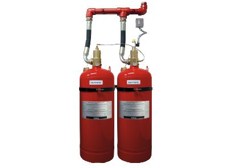
The SAPPHIRE 25 Bar System offers fast, effective gaseous clean agent suppression with features designed for flexibility and safety.
Key features include:
- Six discharge nozzle sizes
- UL/ULC Listed and FM Approved
- Safe for occupied spaces at design concentrations
- Environmentally friendly operation
- Rapid fire suppression performance
Sapphire plus 70 bar system
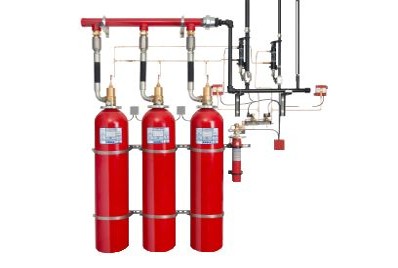
SAPPHIRE PLUS builds on traditional Sapphire technology by increasing system pressure to deliver greater design flexibility.
By operating at 70 bar, Sapphire Plus systems:
- Reduce the number of required containers through higher fill densities
- Lower installation footprint and service time
- Allow containers to be located farther from protected hazards
- Enable selector valves to protect multiple hazards from a single container bank
Notable features:
- Operating temperature range from ‑18°C to 65°C (0°F to 149°F)
- Total flooding protection
- Extended pipe runs
- Added selector valve capability
This system is designed to protect people, the environment, and high‑value assets while minimising downtime through early detection and rapid suppression.
Sapphire compact system (direct low pressure)
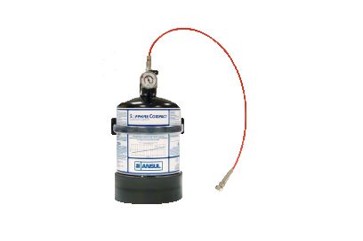
The SAPPHIRE COMPACT System is a direct low‑pressure fixed fire suppression solution specifically designed for small electrical enclosures.
As a self‑contained system, it protects enclosures with either natural ventilation or forced airflow and is designed in accordance with LPS 1666 standards.
Key benefits include:
- Use of FK‑5‑1‑12 clean agent
- Electrically non‑conductive and residue‑free
- Zero ozone depletion and negligible global warming impact
- Safe for occupied spaces at design concentrations
Inert gas fire suppression systems
Inergen fire suppression systems
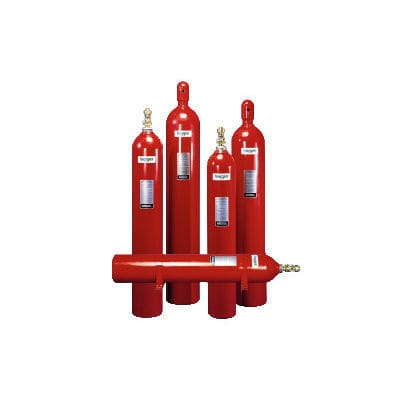
The INERGEN Fire Suppression System is designed for enclosed spaces where people may be present and where traditional agents are unsuitable.
INERGEN uses a blend of naturally occurring gases:
- Nitrogen
- Argon
- Carbon dioxide
Upon discharge, the agent mixes with room air to suppress fire by reducing oxygen levels, then returns to the atmosphere in its natural state. It leaves no residue and produces no corrosive by‑products.
During performance testing, INERGEN exceeded NFPA 2001 requirements, suppressing:
- A Class A fire in 22 seconds
- A Class B fire in 17 seconds
INERGEN systems are available in multiple configurations, including 150 bar, 200 bar, and 300 bar systems, supporting a wide range of applications.
Carbon dioxide (co₂) fire suppression systems
Carbon dioxide fire suppression systems extinguish fires by displacing oxygen, making them highly effective for certain hazard types.
High pressure co₂ systems (non occupied spaces)
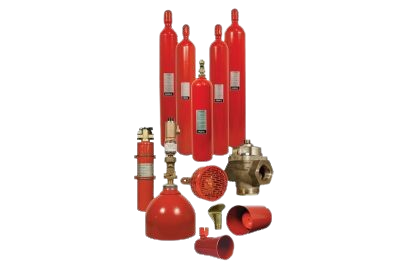
Ansul’s High Pressure Carbon Dioxide Systems are designed for rapid suppression in non‑occupied environments.
Typical applications include:
- Printing presses
- Vaults and open pits
- Spray booths and ovens
- Engine rooms
- Flammable liquid and gas storage areas
Key features:
- Total flooding and local application protection
- Selector valves for multiple spaces
- Fixed nozzle and hose reel distribution
- No residue, non‑corrosive, non‑conductive
- UL/ULC Listed, FM Approved, NFPA 12 compliant
Marine High Pressure CO₂ Systems
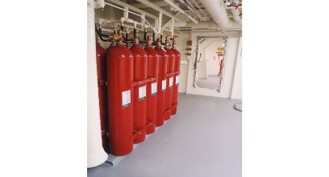
For marine applications, Ansul offers CO₂ systems engineered to protect:
- Engine rooms
- Machinery spaces
- Cargo holds
- Store lockers
These systems feature corrosion‑resistant coatings and carry multiple marine approvals, supporting safe and effective fire suppression at sea.
Large dry chemical stationary systems
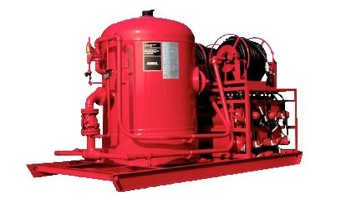
Ansul’s Large Dry Chemical Stationary Systems deliver high‑performance firefighting capability for some of the most hazardous industrial environments.
Designed for industrial, power, oil & gas, and chemical facilities, these systems provide:
- Fast fire knockdown
- Multiple discharge flow rate options
Manually operated protection for demanding applications
Large dry chemical piped systems
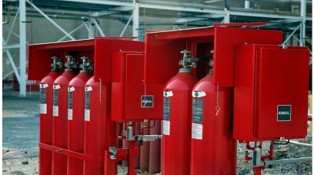
Large Dry Chemical Piped Systems are designed for high‑hazard fire protection in demanding industrial, power, oil and gas (POG), and chemical applications.
These self‑contained systems are designed by factory‑trained personnel and consist of:
- Pressure vessels constructed to ASME standards
- Nitrogen cylinders meeting U.S. Department of Transportation standards
- Automatic detection devices
- Electric or pneumatic manual actuation devices
The systems use dry chemical suppression agents such as PLUS‑FIFTY® C, Purple‑K®, and FORAY®, or dry powder agents including MET‑L‑X®, LITH‑X®, and MET‑L‑KYL®.
An Ansul Dry Chemical Piped System provides automatic fixed‑nozzle protection, including detection and alarm, electric or pneumatic manual actuation, and shutdown of accessory equipment.
Detection flexibility includes:
- Thermal detectors
- Photoelectric detectors
- Rate‑of‑rise detectors
- Ionization detectors
- Flame detectors
Features include:
- Fast fire knockdown
- Corrosion‑resistant paint as standard
- Streamlined installation with agent tank lifting lugs and improved skid handling features
- Weather hoods for nitrogen containers to protect against snow and rain buildup
- Multiple system sizes to match various hazards
- Flexible agent tank outlet options (threaded, grooved, flanged, and union elbow for selected models)
Pre‑configured and pre‑mounted actuation components
Fm‑200 fire suppression systems
Those responsible for managing and protecting high‑value assets, processes, and facilities rely on the quality and performance of the Ansul FM‑200® Clean Agent Fire Suppression System.
FM‑200 systems are internationally accepted fire protection solutions for applications including:
- Telecommunication sites
- Data centres and archives
- Museums
- Oil and gas facilities
- Power plants
The system uses FM‑200 (HFC‑227ea) fire extinguishant, which has zero ozone depletion potential (ODP). This colourless, odourless agent vaporises upon discharge, absorbs heat, and suppresses fire rapidly without leaving residue.
FM‑200 is electrically non‑conductive and will not short electronic equipment or thermally shock sensitive circuitry, helping reduce equipment damage and minimise downtime.
Note: In December 2022, 3M announced the discontinuation of manufacturing for Novec™ 1230. The Levitt‑Safety VFSS team can continue to service existing Novec systems.
Detection & controls
Autopulse detection and control system
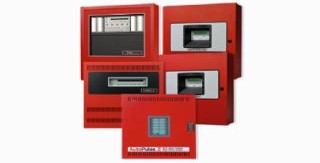
AUTOPULSE detection, control, and fire suppression system releasing panels provide automatic 24/7 fire protection with scalable design options.
Analog Addressable Systems
AUTOPULSE analog addressable panels support modular system planning and can be configured for applications ranging from small buildings to large campuses or high‑rise facilities. Peripheral equipment can be added to suit specific application requirements.
Conventional SystemsVESDA aspirating smoke detection
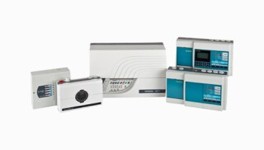
VESDA aspirating smoke detection technology provides the earliest possible warning of a potential fire.
With multi‑level alerts and a wide range of programmable sensitivity settings, VESDA systems can detect minute levels of smoke or particulates before a fire escalates. VESDA detectors are suitable for a broad range of environments, from small to very large open spaces, and from clean to dirty operating conditions.
Which Ansul Fire Suppression System Is Right For Your Application?

Rooms


Control Rooms






FAQ
-
Ansul systems are designed for special hazard environments such as data centres, industrial facilities, marine vessels, power plants, museums, and high‑value asset spaces.
-
Clean agent systems suppress fire chemically and evaporate after discharge, while inert gas systems suppress fire by reducing oxygen levels using naturally occurring gases.
-
Many Ansul systems, including Sapphire and Inergen, are designed to be safe for occupied spaces at specified design concentrations.
-
Clean agent, inert gas, and CO₂ systems leave no residue. Dry chemical systems do leave agent residue and are typically used in industrial environments.
-
Yes. Many Ansul systems support selector valves, allowing a single container bank to protect multiple hazard areas.