

Firetrace Automatic Fire Suppression Systems
Talk to a safety specialist
Firetrace automatic fire suppression systems for micro-environments
When fires start in small, enclosed spaces, they escalate fast. Electrical cabinets, CNC machines, vehicles, and storage compartments often house critical assets, and a single ignition point can cause severe damage in seconds.
Firetrace manufactures automatic fire suppression systems designed specifically for these high-risk micro-environments. These systems detect and suppress fires automatically, often before damage spreads beyond the enclosure.
What makes Firetrace automatic fire suppression systems different?
Firetrace systems are completely self-contained and require no electrical power, making them reliable even in environments where power loss is a concern. Installation and maintenance are straightforward—think of them as automatic fire extinguishers that activate the moment a fire starts.
Firetrace systems are compatible with a wide range of commercially available fire suppressants, including clean agents, foams, and dry chemicals. They are also the only systems of their type to carry major international listings and approvals, including UL, ULC, CE, FM, and more than 20 additional global agencies.
Protecting micro-environments and enclosed spaces
Firetrace automatic fire suppression system
Integrated detection and suppression components installed inside the equipment enclosure.
Suppression cylinder
Stores the fire suppression agent.
Protected enclosure
Fire detection and suppression occur directly inside the equipment enclosure.
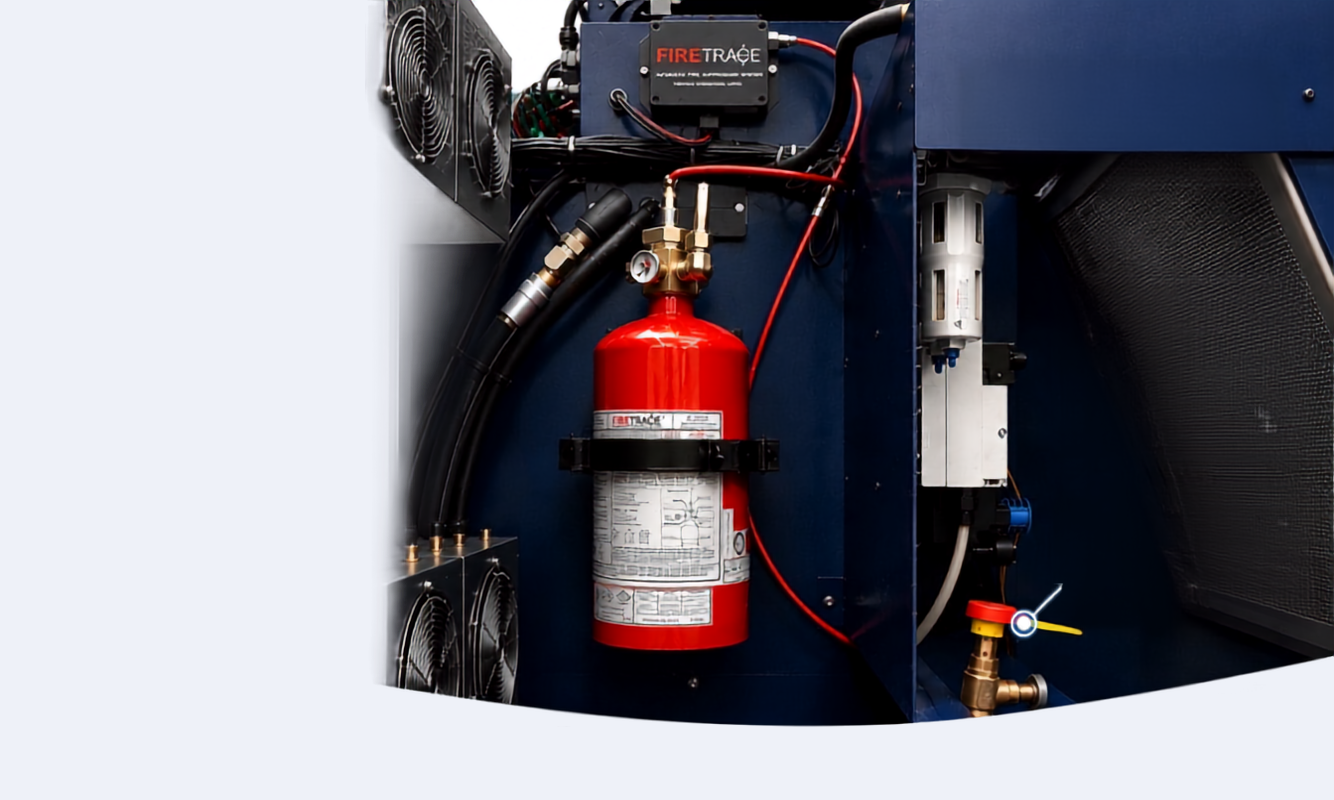
Detection tubing
Detects heat and fire at the source.
Protected enclosure
Fire detection and suppression occur directly inside the equipment enclosure.
Control valve
Automatically releases the suppression agent when activated.
Micro-environments are areas where fire hazards are contained within a specific enclosure, such as:
- Equipment
- Industrial machines
- Vehicles
- Storage compartments
In applications like CNC machines using oil-based coolants, fires can ignite and spread in seconds. Even with operators present, entire machines—and sometimes entire facilities—have been lost to fast-moving fires.
A Firetrace automatic fire suppression system can be installed directly on the machine to detect and suppress a fire at its source, often before significant damage occurs.
Firetrace direct release systems
Direct release fire suppression systems use the Firetrace tube as both the detection and discharge mechanism.
Here’s how they work:
- As a fire begins, heat causes the Firetrace tube to rupture at the hottest point.
- The ruptured tube forms an effective spray nozzle.
- System pressure drops, releasing the full contents of the cylinder through the tube to suppress the fire.
Multiple Firetrace tubes can be used in a single system, allowing protection across larger or more complex enclosures.
Direct release systems are commonly recommended for electrical cabinets, where targeted, rapid suppression is essential to protect sensitive components.
Firetrace indirect release systems
Indirect release systems use the Firetrace tube strictly for detection and system activation—not for discharge.
When heat causes the detection tubing to rupture:
- Pressure drops inside the system
- The indirect valve activates
- Flow is diverted from the detection tube to larger outlet ports
The extinguishing agent is then discharged through diffuser nozzles, flooding the protected area with a proprietary mix of fire-extinguishing chemicals. This approach is ideal for applications that require a higher volume of agent.
Indirect release systems are typically recommended for vehicles and CNC machines, where broader coverage and higher discharge volumes are needed.Direct Release vs Indirect Release
Two proven ways to protect your equipment and enclosures
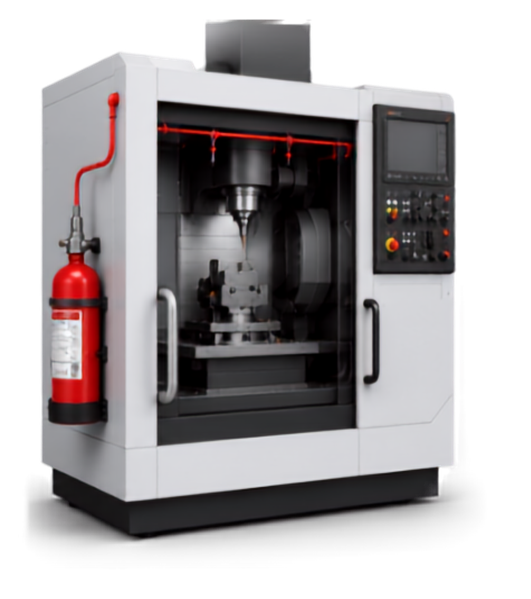
directly at the fire source Best for smaller enclosures
and localised hazards Simple, effective and
self-contained
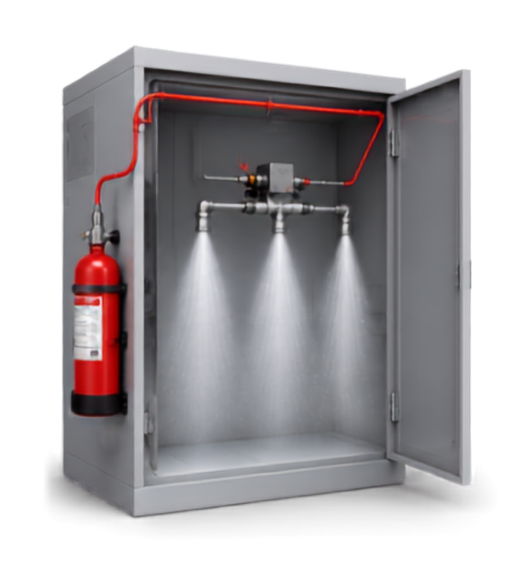
activates system
through diffuser nozzles Best for larger
enclosures and
higher hazard areas Greater coverage and
higher agent capacity
System pressure options for any application
Both direct and indirect Firetrace systems are available in low-pressure and high-pressure configurations, making them suitable for enclosures of virtually any size.
A fire suppression specialist can help determine the best system design based on enclosure size, fire risk, and equipment layout.
New & improved fk-5-1-12 ilp fire suppression systems
Firetrace’s FK-5-1-12 Indirect Low Pressure (ILP) systems have been enhanced for cleaner, simpler installations.
Key improvements include:
- Single-nozzle installation for 2.5 lb, 5 lb, and 10 lb systems
- Up to 6 × 6 ft² maximum nozzle coverage
- New 20 lb clean agent ILP option for larger applications
These systems are designed to protect Class A, B, and C fires and are suitable for electrical cabinets, CNC machines, and data centers. The clean agent will not damage sensitive equipment or leave residue behind.
All new FK-5-1-12 systems carry UL Listing and FM Approval.
Choosing the right fire suppression agent
Selecting the correct extinguishing agent is critical to system performance and application success. To choose the most appropriate agent, it’s important to understand the type of fire hazard involved—Class A, B, C, D, or a combination.
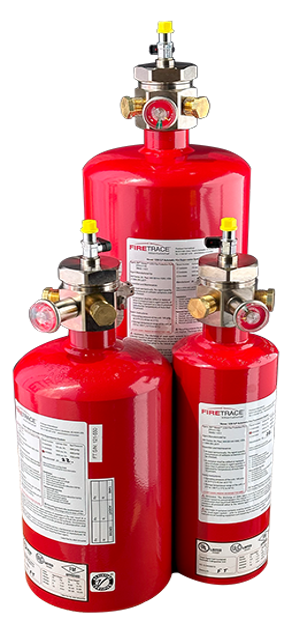
Firetrace systems support a range of agents, including:
- Carbon Dioxide (CO₂)
- ABC Dry Chemical
- Purple K (BC Dry Chemical)
- FK-5-1-12
- FM-200
FK-5-1-12 and FM-200 are classified as clean agents. They suppress fires quickly without harming equipment, personnel, or the environment. These agents are noncorrosive, nonconductive, and leave no residue—minimizing cleanup and operational downtime.
To determine which fire suppression agent is right for your application, consult with a fire suppression expert who can assess your specific risks and requirements.
FAQ
-
It’s a self-activating system that detects and suppresses fires without human intervention, often before damage spreads.
-
Direct systems use the detection tube to discharge the agent, while indirect systems use the tube only for detection and discharge through separate nozzles.
-
Yes. Clean agent options like FK-5-1-12 and FM-200 do not damage electronics or leave residue.
-
No. Firetrace systems are completely self-contained and operate without electricity.
-
Electrical cabinets, CNC machines, vehicles, data centers, and other enclosed micro-environments.