

Supplied Air Respirators (SAR) Systems
Categories
%20systems/supplied%20air%20respirators%20(sar)%20sytems.jpg?width=1920&height=400)
Clean air when you need it most
Supplied air respirators deliver clean, breathable air from an independent source—making them essential for confined spaces, emergency response, and IDLH environments where air quality cannot be trusted.
When is a supplied air respirator needed?
In environments where the surrounding air is toxic, oxygen-deficient, or unknown, traditional filtration isn’t enough.
That’s where atmosphere-supplying respirators (SARs) come in.
These systems deliver breathable air from a clean, independent source, protecting workers in high-risk applications such as:
- Confined space entry
- Emergency response and rescue
- Industrial maintenance and shutdowns
- Chemical handling and hazardous processing
Respirators are typically used when other hazard controls (like ventilation or isolation) are not sufficient to protect workers.
What is an atmosphere-supplying respirator (SAR)?
An atmosphere-supplying respirator provides clean breathing air from outside the work environment, rather than filtering contaminated air.
Unlike air-purifying respirators, SARs:
- Do not rely on ambient air
- Protect against gases, vapours, particulates, and oxygen deficiency
- Are suitable for high-risk or unknown conditions
They are often required in IDLH (Immediately Dangerous to Life or Health) environments—where exposure could cause serious harm or prevent escape.
How supplied air respirators work?
All supplied-air systems operate on the same core principle:
Provide breathable air from a remote or self-contained source
This may include:
- Compressed air cylinders
- Air compressor systems
- Centralized breathing air systems
Because they supply clean air independently, they are one of the most reliable forms of respiratory protection available.
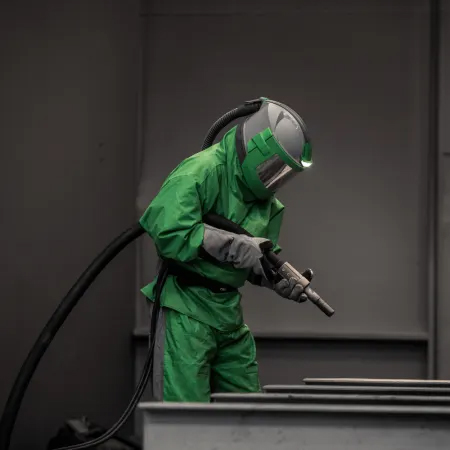
Why choose a supplied air respirator?
Supplied air systems are critical when the stakes are highest.
Key advantages:
✔ Reliable air supply in toxic or oxygen-deficient environments
✔ Required for many confined-space and IDLH applications
✔ Designed to meet CSA Z94.4 and Z180.1 standards for respiratory protection
✔ Configurations available for portability, fixed systems, or emergency escape
WHY CHOOSE A SUPPLIED AIR RESPIRATOR?
Supplied air systems are critical when the stakes are highest.
RELIABLE AIR SUPPLY
Reliable air supply in toxic or oxygen-deficient environments.
CONFINED SPACE & IDLH READY
Required for many confined-space and IDLH applications.
%20systems/514269723%20copy.png?width=1076&height=1292)
CSA COMPLIANT
Designed to meet CSA Z94.4 and Z180.1 standards for respiratory protection.
FLEXIBLE CONFIGURATIONS
Configurations available for portability, fixed systems, or emergency escape.
When the environment is unpredictable, your air supply shouldn’t be.
Choose a supplied air respirator you can trust.
Types of Supplied Air Respirators
Understanding the different types of SARs helps ensure the right protection for your application.
1. Self-Contained Breathing Apparatus (SCBA)
Best for: Emergency response, firefighting, rescue, confined spaces
- Independent air cylinder worn on the back
- Complete mobility—no external air connection
- Suitable for IDLH and oxygen-deficient environments
Typical duration: 15–60 minutes depending on cylinder capacity and usage
2. Supplied-Air Respirator (SAR)
Best for: Long-duration industrial work in controlled environments
- Air delivered through a hose from a compressor or cylinder bank
- Lightweight and comfortable for extended use
- Continuous air supply (no fixed duration)
Consideration: Mobility is limited by the hose length, but long-term comfort and runtime are major advantages.
3. Emergency Escape Breathing Apparatus (EEBA / EBA)
Best for: Emergency escape only
- Compact, quick-to-don devices
- Designed for evacuation—not entry into hazardous environments
Typical duration: 5–15 minutes
Common industries: Marine, rail, oil & gas, and process industries
Choosing the right system
Selecting the right supplied air respirator depends on:
- Hazard type (toxic gas, oxygen deficiency, unknown atmosphere)
- Duration of exposure
- Mobility requirements
- Emergency vs. routine work
Learn More About Respiratory Protection
Looking for a deeper dive into respirator selection, standards, and best practices?
Frequently Asked Questions
-
SCBA uses a self-contained air cylinder for full mobility, while SAR provides air from a filtered compressed air source through a hose for continuous, long-duration use.
-
When air is unsafe to breathe due to contamination, oxygen deficiency, or unknown hazards—especially in confined spaces or IDLH conditions.
-
IDLH stands for “Immediately Dangerous to Life or Health,” referring to environments that pose immediate danger or prevent safe escape.
-
Most SCBA units provide between 15 and 60 minutes of air, depending on the cylinder and conditions.
-
Yes, but only when properly configured (often with an escape cylinder), depending on the hazard and safety requirements.