

Wildfire smoke in the workplace: why air quality monitoring matters for worker safety

For many Canadian businesses, wildfire smoke is no longer a rare seasonal disruption. It has become an operational and occupational health concern that can affect outdoor workers, transportation networks, facilities, warehouses, industrial sites, and even indoor environments.
One of the biggest challenges with wildfire smoke exposure in the workplace is that risk is not always obvious. Smoke conditions can shift quickly depending on weather patterns, ventilation systems, proximity to wildfire activity, and local air movement. In some cases, air quality may deteriorate before workers fully recognize the severity of the hazard.
That creates a difficult situation for employers and safety leaders:
How do you protect workers from a hazard you cannot accurately measure?
At Levitt-Safety, this question sits at the centre of occupational hygiene and exposure monitoring. As Jonathan McCallum, Market Segment Manager at Levitt-Safety explains:
"It's hard to protect people from something if you can't identify or quantify what they are actually exposed to"
That is why more organisations are turning toward real-time air quality monitoring during wildfire events.
Key takeaways
- Wildfire smoke is becoming a growing occupational health concern across industrial, transportation, and commercial workplaces.
- Visibility alone is not a reliable indicator of workplace air quality or worker exposure risk.
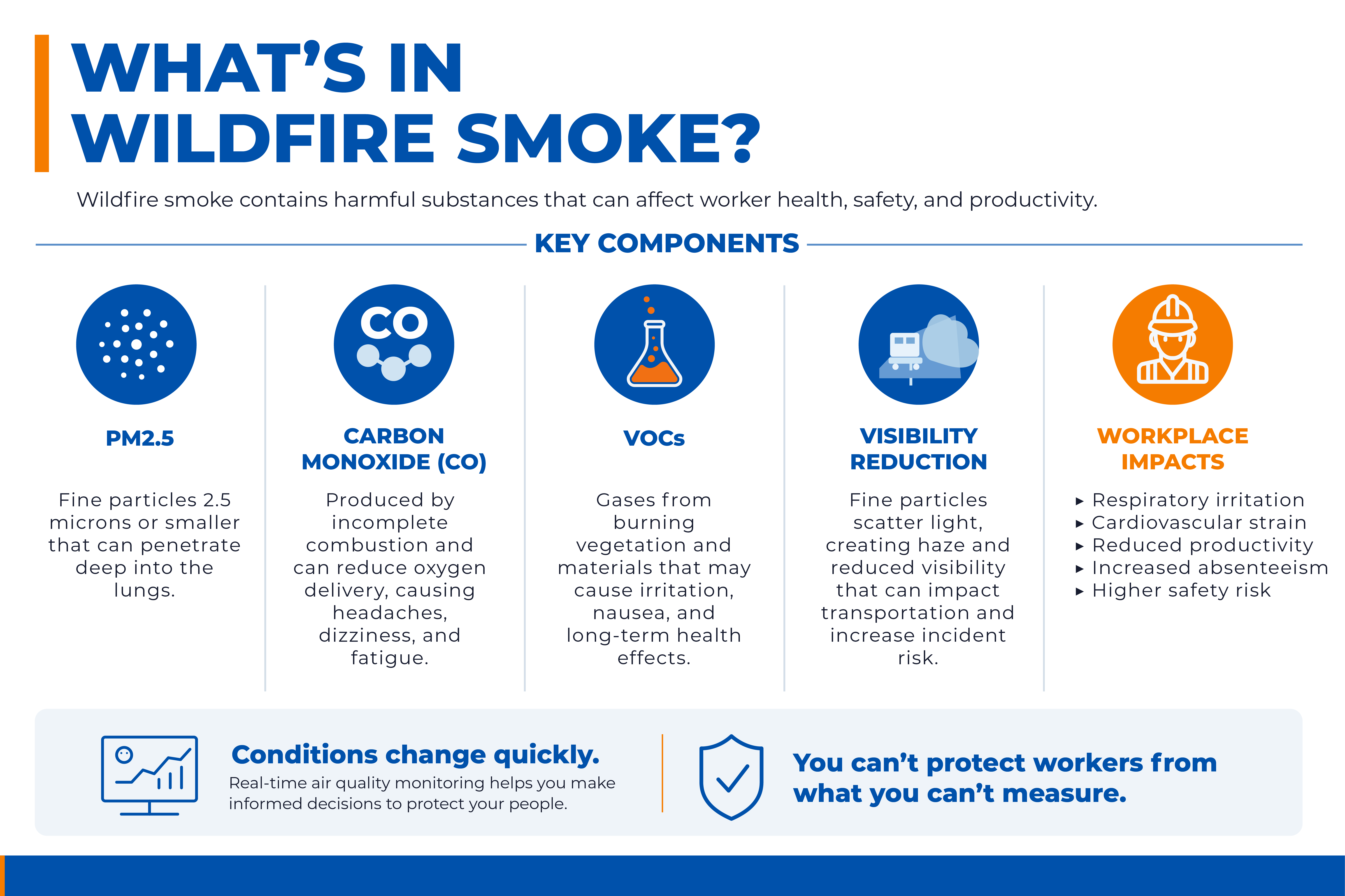
- Wildfire smoke can contain harmful pollutants including PM2.5, carbon monoxide (CO), and volatile organic compounds (VOCs).
- Real-time air quality monitoring helps organisations make faster, more informed safety decisions during changing smoke conditions.
- Public air quality alerts may not accurately reflect conditions at a specific facility, worksite, or indoor environment.
- Monitoring solutions like Aethair PRO provide continuous visibility into environmental conditions through real-time particulate and gas detection.
What’s in wildfire smoke?
Wildfire smoke contains airborne contaminants that create serious workplace exposure risks for employers managing worker health and safety.
Some of the most significant types of contaminants include:
- PM1, PM2.5, and PM10 particulate matter
- carbon monoxide (CO)
- volatile organic compounds (VOCs)
- carbon dioxide (CO2)
Fine particulate matter, particularly PM2.5, is often one of the primary concerns because these particles are small enough to penetrate deep into the respiratory system.
Exposure to fine particulates may contribute to:
- respiratory irritation
- reduced visibility
- headaches and fatigue
- aggravated cardiovascular conditions reduced worker comfort and productivity
Certain industries may face elevated risk during wildfire events, including:
- manufacturing
- utilities
- logistics
- mining
- transportation
- facilities operations outdoor work environments
Indoor workplaces are not automatically protected, as wildfire smoke can significantly affect indoor air quality through HVAC systems, entrances, and ventilation pathways.
Why visual conditions and public alerts are not always enough
Many organisations rely on public weather reports or AQHI updates, but these tools are not always sufficient for workplace air quality monitoring decisions.
Public AQHI alerts are useful, but employers often require site-specific workplace air monitoring to make operational safety decisions.
Air quality can vary significantly depending on:
- local geography
- wind direction
- building ventilation
- operational activity
- indoor versus outdoor conditions
Conditions may also change rapidly throughout the day.
This creates a major challenge for employers trying to make operational decisions such as:
- whether outdoor work should continue
- whether respiratory protection is needed
- whether indoor air quality remains acceptable
- whether additional worker communication is required
Without local monitoring data, organisations are often forced to rely on assumptions.
What real-time air quality monitoring enables
Modern workplace air quality monitoring systems provide organisations with continuous visibility into changing environmental conditions.
Rather than reacting only after workers report discomfort or smoke becomes visibly severe, monitoring systems can help identify developing issues earlier and respond more confidently.
Capabilities may include:
- real-time particulate monitoring
- carbon monoxide detection
- VOC tracking
- automated threshold alerts
- remote monitoring access trend analysis and reporting
This information can support:
- faster operational decision-making
- worker protection planning
- emergency response coordination
- communication with stakeholders continuity planning during wildfire events
Solution spotlight: Aethair Pro for air quality monitoring during wildfire smoke events
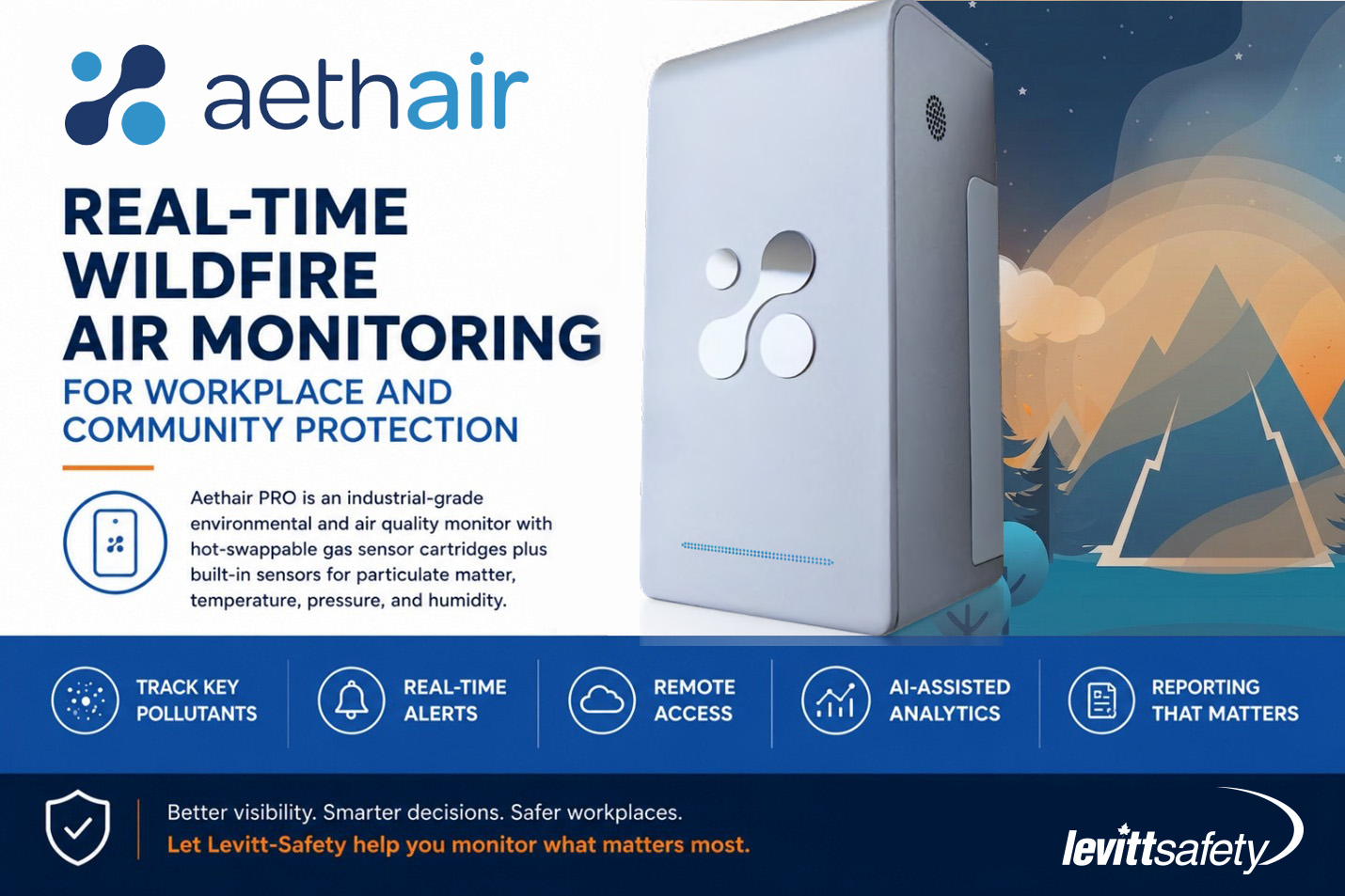
Aethair Pro a modern wildfire air quality monitoring platform designed to provide continuous visibility during smoke events.
The system supports monitoring for:
- PM1
- PM2.5
- PM10
- carbon monoxide
- VOCs carbon dioxide
Additional capabilities include:
- AI-assisted trend analysis
- cloud-based remote access
- reporting functionality
- threshold notifications support for indoor, outdoor, and mobile applications
For organisations operating across multiple facilities or changing environmental conditions, this type of visibility can support more informed response planning.
What employers should consider during wildfire season
Every organisation’s response plan will differ depending on industry, workforce exposure, and operational requirements. However, several considerations are becoming increasingly important during wildfire events:
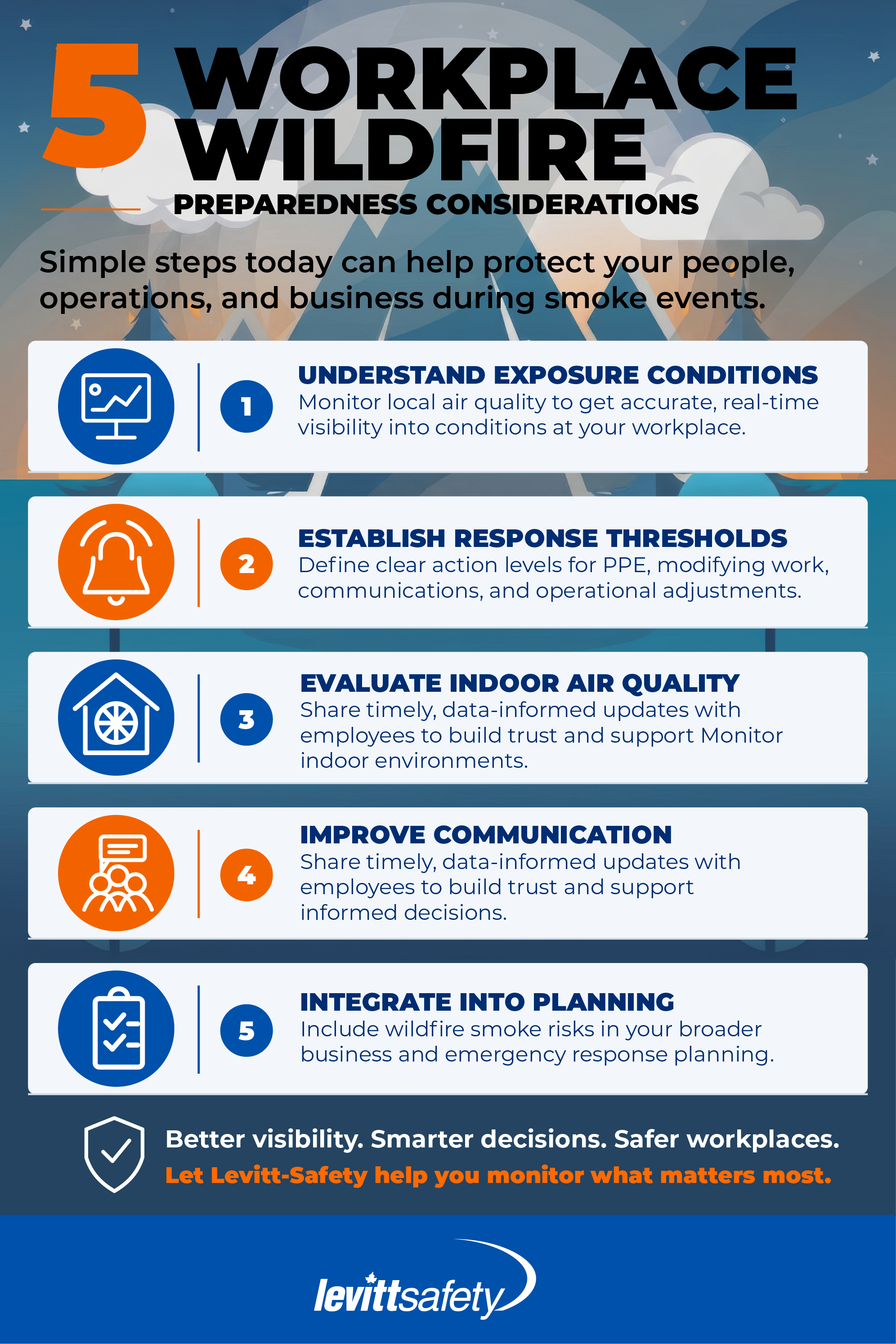
1. Understand exposure conditions
Monitoring local conditions provides a stronger foundation for decision-making than relying solely on regional reporting.
2. Establish response thresholds
Define in advance:
- when additional PPE may be required
- when outdoor work should be modified when worker communications should escalate
3. Evaluate indoor air quality
Smoke infiltration may affect offices, warehouses, and production spaces even when doors and windows remain closed.
4. Improve communication
Workers are more likely to trust workplace decisions when organisations can communicate clearly using real environmental data.
5. Build wildfire response into business continuity planning
Wildfire smoke events may affect:
- staffing
- transportation
- productivity
- facility operations customer service timelines
-
Yes. Wildfire smoke can create occupational health risks for both outdoor and indoor workers. Smoke may contain fine particulate matter (PM2.5), carbon monoxide (CO), and volatile organic compounds (VOCs), which can affect respiratory health, visibility, comfort, and overall workplace safety.
-
Employers can use real-time air quality monitoring systems to track changing environmental conditions at specific workplaces or jobsites. Modern monitoring platforms can measure pollutants such as PM2.5, PM10, CO, and VOCs while providing alerts, reporting, and trend analysis to support workplace decision-making.
-
Regional air quality alerts may not accurately reflect conditions inside a facility, at a remote worksite, or along transportation routes. Air quality can vary significantly depending on wind patterns, ventilation systems, local geography, and operational conditions. Site-specific monitoring provides more accurate visibility into actual exposure conditions.
-
A workplace wildfire smoke response plan should include:
- real-time air quality monitoring
- defined response thresholds
- worker communication protocols
- indoor air quality considerations
- PPE guidance
- operational continuity planning
- escalation procedures during severe smoke events