

Emergency Escape Breathing Apparatus (EEBA)
Emergency Escape Breathing Apparatus (EEBA) are life-saving, self-contained systems designed to provide breathable air during emergency evacuation from hazardous or oxygen-deficient environments.
Whether it’s a sudden gas release, smoke event, or confined space incident, EEBA units give workers critical time to exit safely—without relying on ambient air.
At Levitt-Safety, we offer a full range of certified EEBA solutions engineered for industrial plants, offshore installations, mining sites, and marine environments.
Key Takeaways
- EEBAs are escape-only devices designed to provide breathable air during emergency evacuation—not for rescue or entry work.
- They typically deliver 10–60 minutes of air, depending on the model and technology (compressed air vs chemical oxygen).
- Fast deployment is critical — most units use quick-don hoods or mouthpieces for use in high-stress situations.
- EEBAs are used in high-risk industries such as petrochemical, offshore oil & gas, mining, marine, and chemical processing.
- Choosing the right EEBA depends on escape time, facility layout, environmental conditions, and ease of use with PPE.
- Regular inspection, maintenance, and training are essential to ensure units are ready when needed.
- EEBAs act as a last line of defence, giving workers the time they need to safely exit hazardous or oxygen-deficient environments.
What Is an EEBA (and How It Works)
An EEBA is a compact, self-contained breathing device that supplies breathable air or oxygen in environments that are immediately dangerous to life or health (IDLH).
Unlike SCBAs, which are used for entry or rescue operations, EEBAs are designed strictly for emergency escape.
Most units include:
- A compressed air cylinder or chemical oxygen generator
- A regulator system to control airflow
- A hood or facepiece that seals around the head
- Automatic or rapid activation for immediate use
Once activated, the unit delivers a continuous flow of breathable air, helping prevent inhalation of toxic gases or smoke while enabling safe evacuation.
Key Features of EEBA Systems
EEBA units are engineered for speed, reliability, and ease of use under high-stress conditions:
- Self-contained air supply: compressed air or chemical oxygen source
- Fast deployment: quick-donning hood or mouthpiece
- Short-duration protection: typically 10–60 minutes depending on model
- Compact design: belt-mounted or wall-mounted for accessibility
- Clear visor or hood: improved visibility during evacuation
- Low maintenance: long shelf life with minimal servicing
These features ensure workers can act quickly—often within seconds—when conditions change unexpectedly.
Typical Applications for EEBA Equipment
EEBA systems are used in environments where atmospheric hazards can develop rapidly and without warning.
Common industries include:
- Petrochemical and refining plants
- Offshore oil and gas platforms
- Mining and tunnelling operations
- Shipboard and marine environments
- Chemical manufacturing facilities
- Water and wastewater treatment plants
These devices are especially critical in confined spaces and high-risk facilities where safe exit time is limited.
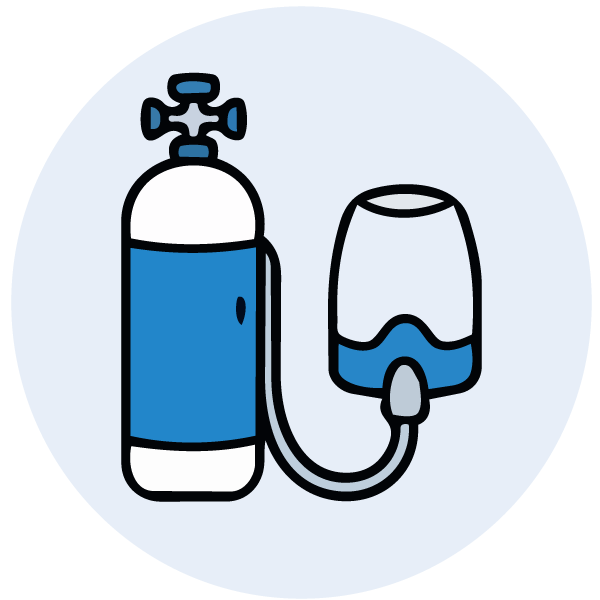
Compressed-air EEBA
Uses a small compressed air cylinder with escape hood.
Typical duration*
10–20 minutes
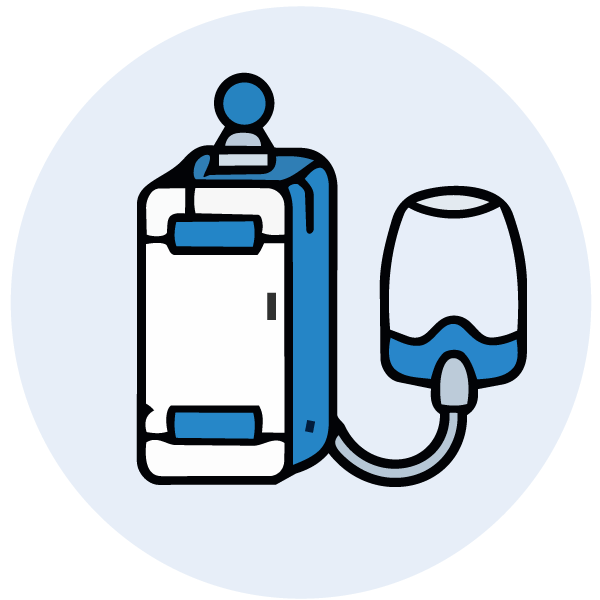
Chemical oxygen EEBA
Generates oxygen via chemical reaction.
Typical duration*
15–60 minutes
*Actual escape duration varies based on user breathing rate, activity level, and manufacturer specifications.
Each type has advantages depending on your facility’s layout, escape routes, and risk profile.
How to Select the Right EEBA for Your Facility
Choosing the right EEBA isn’t just about compliance—it’s about ensuring safe evacuation under worst-case conditions.
Consider the following factors:
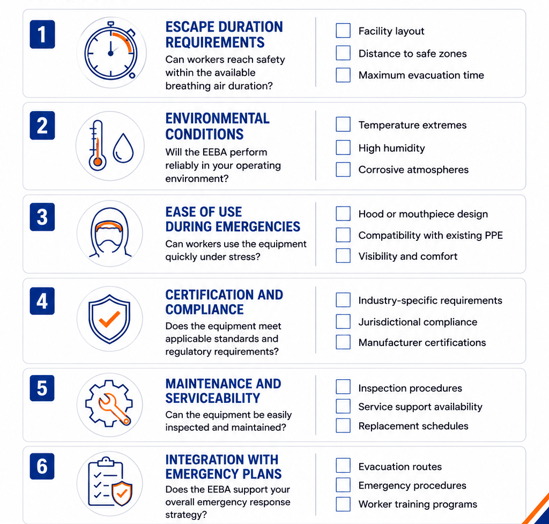
Regulatory frameworks also require routine inspection, maintenance, and documented procedures to ensure devices remain operational and ready for use.
Why EEBA Systems Are Critical for Workplace Safety
EEBA units serve as a last line of defence when atmospheric hazards occur unexpectedly.
They don’t prevent incidents—but they provide the essential time needed for safe escape when every second matters.
For high-risk industries, integrating EEBA systems into your safety program is a key component of emergency preparedness and worker protection.
Frequently Asked Questions
-
EEBA is for escape only, while SCBA is used for entry, rescue, or extended work in hazardous environments.
-
Typically between 10 and 60 minutes, depending on the type and model.
-
They should be easily accessible, typically wall-mounted or in strategic locations near high-risk zones.
-
Yes. Workers should be trained to don and activate quickly under stress to ensure proper use.
-
In many industries and IDLH environments, regulations require appropriate escape respirators to be available and maintained.