

Drug Testing
Improve safety, support compliance and make informed decisions faster
Drug testing is a core component of effective workplace safety and compliance programs. In safety-sensitive environments, the ability to detect substance use quickly can help reduce risk, protect workers and support confident decision-making.
This guide outlines key drug testing methods highlights proven solutions and explains how to build a practical and reliable drug testing program.
Quick takeaways
- Point-of-Collection oral fluid drug testing supports safer workplaces by identifying recent substance use
- Point-of-Collection analyzers provide a reliable, standardized test process to help make informed decisions quickly in dynamic work environments.
- Urine drug screening is considered best practice for pre-hire screening or clinical applications where you need to see a person’s potential drug use history across days
Levitt-Safety provides trusted solutions from Abbott for both urine and oral fluid drug testing programs.
What is drug testing?
Drug testing is the process of detecting drugs or their metabolites in biological samples, typically oral fluid (saliva) or urine.
It is widely used in workplace safety programs, roadside screening and regulated work environments to reduce risk and support compliance.
Common applications include:
- Pre-employment screening
- Post-incident and reasonable-cause testing
- Roadside drug screening
- Ongoing compliance program in regulated industries (e.g., Scheduled Testing)
Why drug testing matters
Substance use in safety-sensitive environments introduces serious operational and safety risks, including:
- Workplace incidents and injuries
- Reduced productivity and reliability
- Regulatory non-compliance
- Increased liability for employers
A structured drug testing program helps organizations maintain safer operations while demonstrating due diligence under occupational health and safety requirements.
Rapid on-site drug screening is critical to making immediate, informed workplace safety decisions in industries such as natural resources, construction, transportation and manufacturing. With proper program design, drug testing best practices can be implemented in a way that does not infringe upon individual human rights and privacy.
Drug testing methods
1. Oral fluid testing (Saliva)
Oral fluid testing is commonly used where speed, convenience and observed collection are important, and when you want to rule out recent substance use as a potential safety concern.
Key advantages:
- Results available within minutes
- Non-invasive and easy to administer
- Observed collection reduces tampering risk
Suitable for post-incident, reasonable cause, or pre-access testing
2. Urine drug testing
Urine testing remains a widely used method for broader screening programs and clinical settings where detecting recent drug use is less important than knowledge of an individual’s potential drug use history or compliance with a return-to-work program.
Key advantages:
- Supports a wide range of drug panel configurations
- Established and widely accepted testing method
Considered best practice for pre-hire screening, addiction treatment & recovery medicine, and clinical testing applications.
Featured drug testing solutions
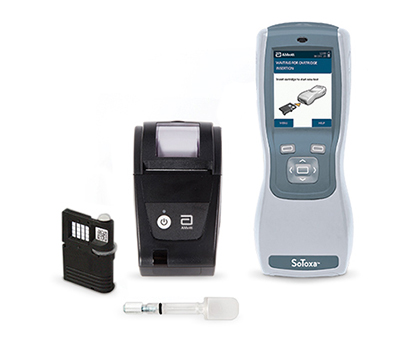
SoToxa™ Oral fluid mobile test system
A portable, handheld drug testing analyzer designed for rapid oral fluid screening in workplace and roadside environments.
Key benefits:
- Delivers fast, on-site results within minutes
- Compact and portable for field use & reporting
- On-screen process guidance & objective result analysis reduces subjectivity and interpretation variance
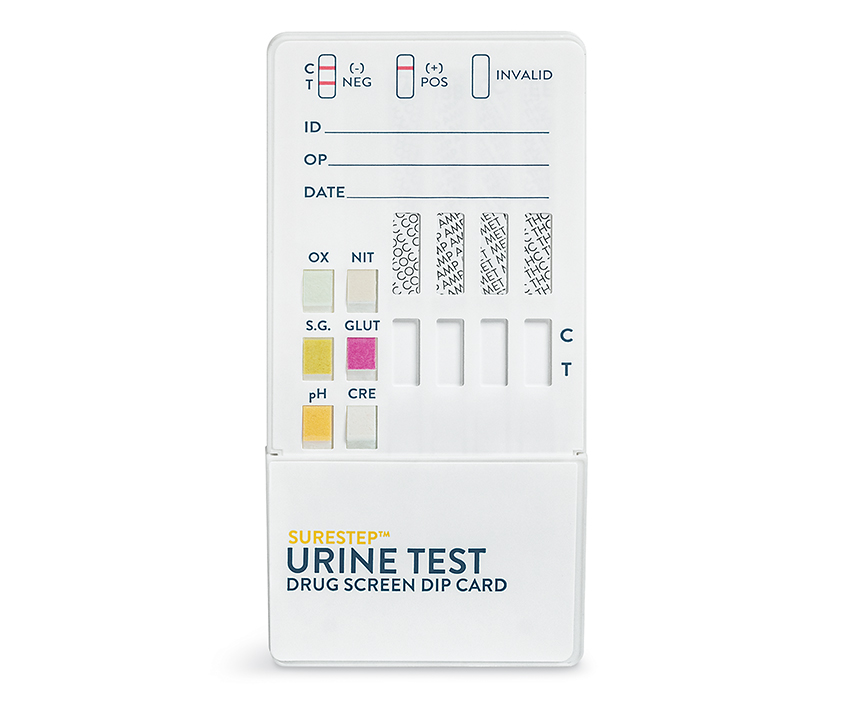
SureStep™ Urine test drug screen dip card
A straightforward solution for quick and efficient urine drug screening.
Key benefits:
- Simple procedure with rapid results
- Available in single and multi-drug configurations
- Supports flexible testing programs
Easy to administer with minimal training
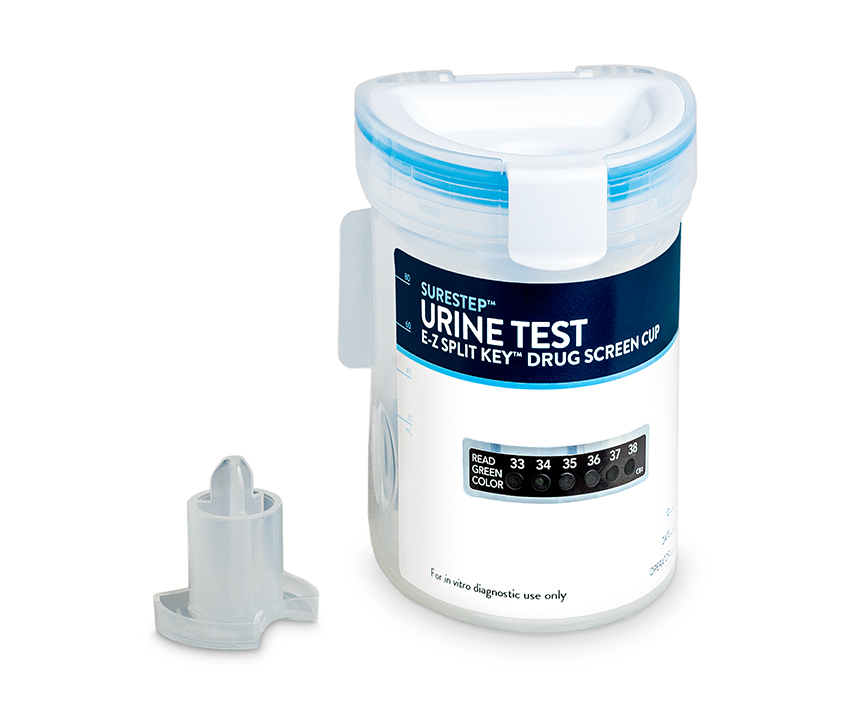
SureStep™ E‑Z Split Key™ drug screen cup
A self-contained urine drug testing cup that combines collection and screening in one device.
Key benefits:
- Reduces collector exposure to samples
- Integrated temperature strip verifies specimen integrity
- Clear, easy-to-read results
Efficient for occupational health, clinical applications, or pre-hire screening.
How to choose the right drug testing solution
Selecting the right solution depends on your operational requirements and testing environment.
Key considerations include:
- Location: on-site, roadside or controlled environment
- Required turnaround time for results
- Level of supervision needed during collection
Many organizations adopt a combination of oral fluid and urine testing to balance speed, accuracy and programs requirements.
Compliance and best practices
An effective drug testing program should align with applicable workplace policies and regulatory expectations.
Best practices include:
- Clearly defined testing policies and procedures
- Consistent documentation and recordkeeping
- Proper training and education for personnel conducting tests
- Alignment with clearly defined goals for workplace safety program
Standardised processes help ensure reliable results, fair application and defensible compliance.
How Levitt-Safety can help
Levitt-Safety provides both equipment and expertise to help organizations implement effective drug testing programs.
Our support includes:
- Guidance on selecting appropriate testing solutions
- Access to reliable, field-proven equipment
- Support for implementation of programming
- Calibration and repair services
- Training and compliance-focused advice and referrals
Whether you are introducing a new program or refining an existing one, our specialists can help you build a practical and defensible approach to drug testing.
FAQ
-
The most common methods are oral fluid and urine testing, both of which provide fast and reliable screening options.
-
Rapid drug testing systems can deliver results within minutes at the point of collection. Non-negative tests are typically followed up with a third-party collection for lab analysis.
-
Drug testing is commonly used in construction, transportation, mining, marine, manufacturing, and other safety-sensitive industries.
-
Oral fluid testing is often preferred for speed. observed collection, and situations where you need to understand if drug use was recent, while urine testing is used for broader screening programs and looking at a longer window of drug detection (historical use).[JM1]
[JM1]Also explore confirmation testing when a non-negative test is conducted
-
Compliance requires clear policies, proper training, consistent documentation and alignment with applicable regulations.